The United Nations is trying to hold together a world where 123.2 million people were forcibly displaced by the end of 2024 — roughly 1 in every 67 people on Earth — while a single veto from one of five permanent powers can still freeze action in its most powerful chamber.
That’s the contradiction at the heart of the UN, and it’s exactly why the organization keeps attracting both frustration and dependence. Built in 1945 by 51 states after a world war, it now includes 193 members, which sounds like global legitimacy — until you look at how much authority still sits inside a 15-member Security Council.
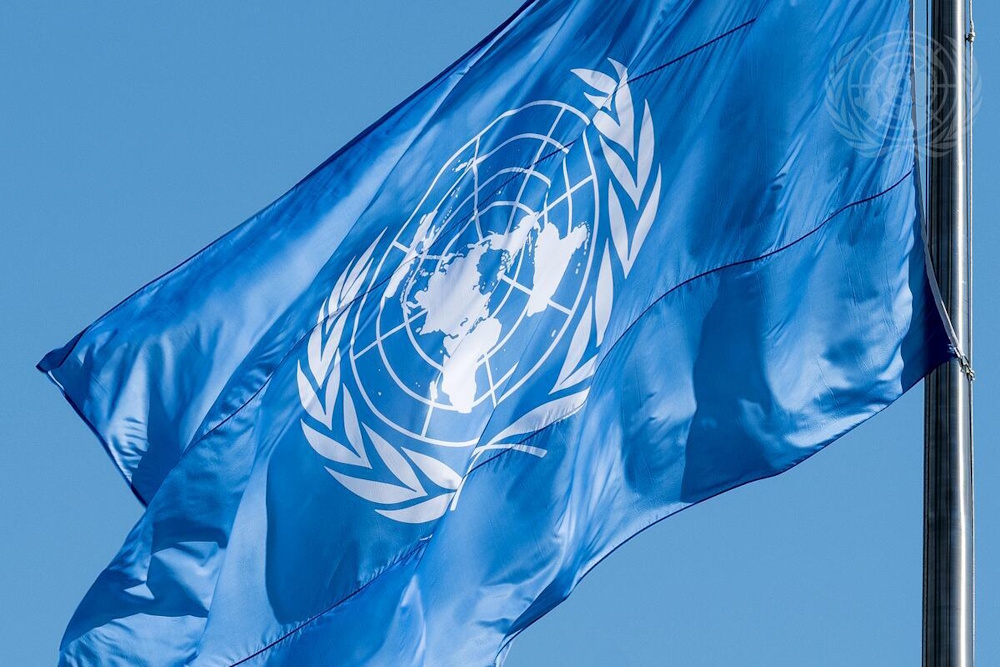
My view is simple: the UN makes people cynical because it looks slow, political, and compromised, but judging it only by speeches and deadlock misses the machinery that feeds, protects, and coordinates on a scale few institutions can match.
How the United Nations was formed
Fifty countries signed the UN Charter in San Francisco in 1945 because the previous global experiment had failed in the worst possible way: it didn’t stop another world war. The League of Nations collapsed when aggression had to be confronted, not just condemned, and that failure shaped The United Nations from the start. This wasn’t idealism dressed up as policy. It was a harder, more realistic attempt to build something that could survive great-power politics.
The United Nations was defined in June 1945 at the San Francisco Conference, where delegates negotiated the Charter that still sets its structure, powers, and limits.
When it took effect later that year, 51 states became original members.
By 2025, membership had reached 193, which matters because a body created by a relatively small postwar group became the closest thing the world has to a universal political forum.
The founding deal was practical, but far from equal. The United States, the United Kingdom, France, Russia, and China got permanent seats on the Security Council because the system would fail without the major victors of World War II inside it.
That made The United Nations more durable, in my view, but less democratic from day one. It was built to keep the peace, yet the strongest states kept the most control. That’s not a flaw added later. It’s the design.
What the United Nations actually does
The United Nations does far more than hold meetings. As of March 2024, nearly 95,000 personnel were serving in 11 peacekeeping missions, operating where ceasefires are weak and civilians are at risk.
But those missions only exist when the Security Council approves them, which is the catch: peacekeepers can monitor truces, protect civilians, support elections, and help enforce deals only when governments and major powers allow it.
Its humanitarian agencies do a different job entirely. UNICEF handles vaccines, nutrition, education, and child protection. The World Food Programme delivers food and cash when war or famine breaks supply chains.
The World Health Organization tracks outbreaks, issues health guidance, and helps countries respond when disease moves faster than politics. Treating them as one generic UN effort misses the point. They share a banner, not a function.
The scale is massive. In 2024, the United Nations coordinated humanitarian aid for 116 million people across 77 countries.
Refugee work sits inside that system too, as forced displacement reached 123.2 million people by the end of 2024 — about 1 in every 67 people on Earth. That number should stop you. It shows how much demand lands on a system that was never designed to control the crises causing it.
Public health shows both the reach and the limit of the UN. During Ebola and COVID-19, its agencies helped coordinate surveillance, logistics, medical guidance, and cross-border aid.
But here’s the hard truth: the United Nations can organize and scale a response, not command one. It still depends on member states for money, troops, access, and political permission.
How the Security Council holds power
One permanent member can kill action even when the rest of the chamber is ready to move. That’s the Security Council’s real power: concentrated authority, not consensus.
It has 15 members—5 permanent and 10 elected for two-year terms—and on substantive matters it can approve sanctions, peace operations, and military force. But Article 27 requires at least nine votes and no veto from a permanent member. One capital can stop the whole body.
That gives the council unmatched weight in war and peace. No other UN body can provide the same legal and political cover for coercive action. But there’s the catch: the institution with the most authority is also the easiest to freeze. That contradiction defines how The United Nations handles its hardest crises.
Syria made the weakness impossible to ignore. Years of bloodshed produced repeated draft resolutions, yet vetoes—mainly from Russia, sometimes with China—blocked stronger action on accountability, civilian protection, and cross-border aid at critical points. Ukraine made the flaw even clearer. When a permanent member is part of the conflict, the council’s credibility runs straight into its own rules.
The trend is getting worse, not better. In 2024, the council recorded eight vetoes on seven draft resolutions. Only 30 of 46 resolutions passed unanimously—65%, far below the 84% average from 2014 to 2023. The council still matters most when hard security is on the line. But its power is inseparable from the veto, and that same veto is what turns urgent crises into stalemate.
Why the UN gets criticized so often
One country can still stop everyone else, and that flaw sits at the center of The United Nations. The Security Council’s real power remains with five states from 1945, not the world you see now. That’s why India, Brazil, Germany, and Japan keep coming up in reform fights. When major powers are asked to accept decisions from a club they can’t fully join, legitimacy starts to break.
People expect The United Nations to act like a world government. It can’t. It passes resolutions, sends envoys, authorizes missions, and sets standards, but enforcement collapses when major powers split. In 2024, the Security Council saw 8 vetoes on 7 draft resolutions, which shows the basic truth: action depends less on urgency than on political agreement.
Nothing damages the UN more than failure under its own flag. Rwanda in 1994 and Srebrenica in 1995 still define the case against it because peacekeepers were present, warnings existed, and mass killing still happened. That shattered the myth that international presence means protection. A blue helmet carries moral weight, but without troops, mandate, and political backing, it doesn’t stop armed killers.
The funding gap is brutal. In 2024, 323.4 million people needed humanitarian aid, but only $21.2 billion of the $49.6 billion requested arrived — just 43%, meaning more than half the response went unfunded. So yes, The United Nations gets blamed. But critics miss the harder truth: states demand results, then withhold the money, unity, and authority needed to deliver them.
Why the United Nations still matters
The 1948 declaration still reaches far beyond New York. The Universal Declaration of Human Rights wasn’t a treaty, so it couldn’t force compliance on its own. But that’s exactly the point. In 30 articles, it set a shared baseline—from freedom from torture to the right to education—and that language shaped later treaties, constitutions, and court decisions. The United Nations matters here because it turned moral claims into standards governments now have to answer for.
The same thing happened in development. In 2015, all UN member states signed onto the 2030 Agenda and its 17 Sustainable Development Goals, tying poverty, health, education, climate, gender equality, and governance into one framework instead of treating them as separate problems. It doesn’t compel action. Good.
The United Nations is weakest when it tries to force outcomes and strongest when it sets targets countries can compare, defend, and build policy around. That’s less dramatic than military power, but often more durable.
Some of the UN’s best work happens where force would be useless. Election monitoring can steady disputed results. Refugee agencies register families and keep protection systems running when states can’t.
Relief offices coordinate governments, donors, and aid groups after wars, floods, and earthquakes so assistance reaches people faster and with less waste. You may not see headlines about that, but this is the practical side of The United Nations at its best.
Cynics miss the value of friction. A forum where rivals argue in public isn’t a side feature; it’s the mechanism. When nearly every country keeps showing up, trading accusations, negotiating language, and defending its record under shared rules, that process matters. It’s messy. But messy diplomacy is better than silence, and far better than leaving every dispute to raw power.
Conclusion
The United Nations matters most when you stop treating it like a world government and start seeing it for what it is: a messy bargain between sovereignty and survival. It can be blocked by vetoes, starved of cash, and blamed for failures it was never given the power to prevent. But 116 million people still received coordinated humanitarian assistance in 2024, and nearly 95,000 peacekeeping personnel were deployed across 11 missions. That’s not symbolism. That’s infrastructure for a fractured world. The real question isn’t whether the UN is flawed — it is — but whether you want global crises handled with a weak common system or with no common system at all. That choice gets harder, and more serious, every year.
Frequently Asked Questions
What does the United Nations actually do?
It helps countries work together on peace, human rights, aid, and global rules. That sounds broad because it is, but the real value is in giving countries a place to negotiate before problems turn into bigger ones. It doesn’t solve everything, and that’s the point people miss.
How does the UN make decisions?
Different parts of the UN make decisions in different ways, and that’s where a lot of the confusion comes from. The Security Council can pass binding resolutions, but veto power from the five permanent members can stop action fast. So yes, the system can move, but it can also stall hard.
Why is the UN Security Council so controversial?
Because five countries can block a resolution even when most of the world supports it. That gives the Council real power, but it also makes people question whether the system is fair. If you want speed and authority, it helps; if you want equal representation, it falls short.
Is the United Nations part of the world government?
No, and that misconception causes a lot of sloppy thinking. The UN can coordinate, persuade, and set standards, but it can’t force countries to obey like a global government would. Its power comes from agreement, not control.
Why does the United Nations matter if it can’t stop every conflict?
Because ‘perfect’ isn’t the standard here. The UN provides a channel for diplomacy, humanitarian aid, and international pressure when the alternative is silence or chaos. That matters even when the results are messy, because messy coordination is still better than none.