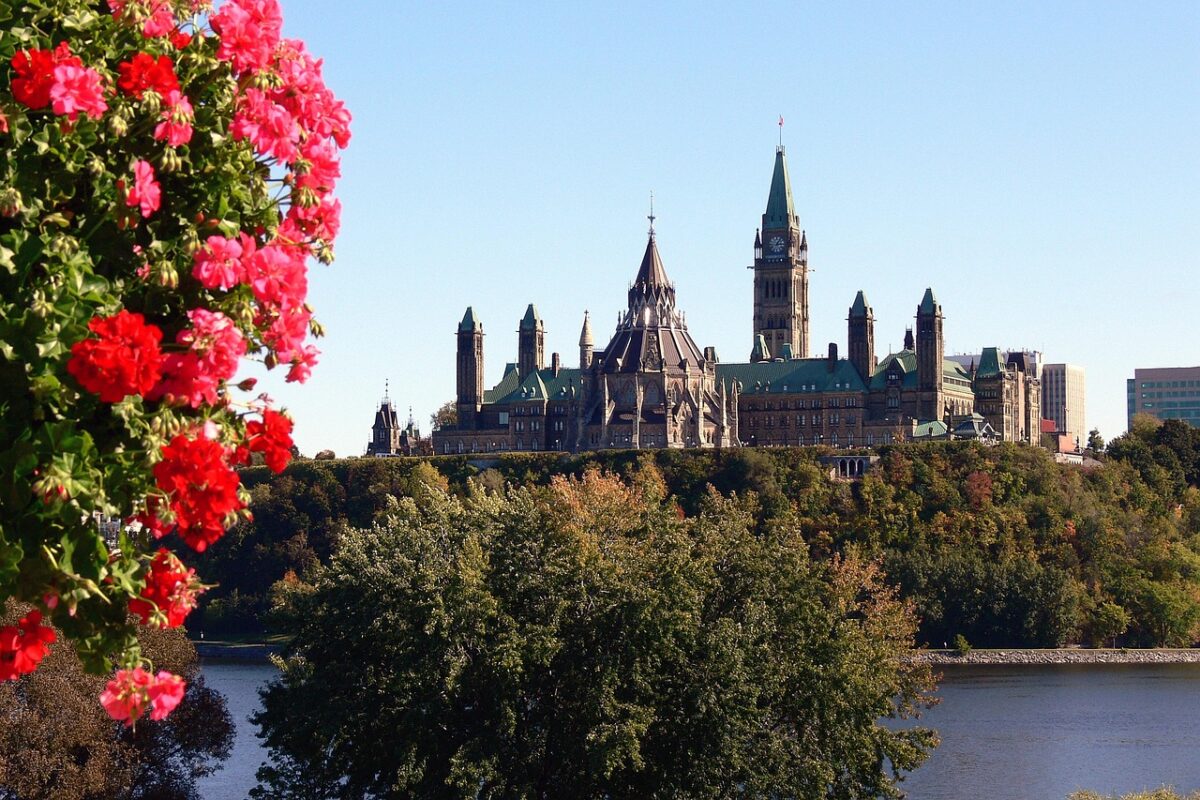
This year, 2026, marks a historic milestone for Canada’s capital. Exactly two centuries ago, a rough-and-tumble work camp was established on the banks of the Ottawa River. It was a place of mud, malaria, and lumberjacks, created for a single purpose: to build a canal.
Today, that settlement is a G7 capital, a tech hub known as “Silicon Valley North,” and a city celebrated for its tulips and architecture.
As we celebrate the 200th Anniversary of Ottawa, let’s look back at the incredible journey from the lawless days of “Bytown” to the modern metropolis of today.
Ottawa: At A Glance
| Feature | Details |
| Founded | September 26, 1826 (as Bytown) |
| Renamed Ottawa | 1855 |
| Current Age | 200 Years (in 2026) |
| Founder | Lt. Col. John By |
| Famous Landmark | Parliament Hill, Rideau Canal |
1. The Beginning: Colonel By and the Canal (1826)
The story begins not with a politician, but with a soldier. Following the War of 1812, the British feared that the Americans would invade again and block the St. Lawrence River (the main supply route). They needed a “back door” supply line.
In 1826, Lieutenant Colonel John By of the Royal Engineers arrived to build a massive waterway connecting the Ottawa River to Lake Ontario. He set up his headquarters at the entrance of the canal. The settlement that sprang up around him was named Bytown.
2. The Wildest Town in North America
Before it was a staid government town, Bytown was arguably the most dangerous place in North America. In the 1830s, it was the setting of the Shiners’ War—years of violent street fighting between rival Irish timber raftsmen and French-Canadian lumberjacks. Alcohol flowed freely, and the law was virtually non-existent. It was a far cry from the polite city we know today!
3. Becoming “Ottawa” (1855)
As the canal was completed and the timber trade boomed, the town grew up. In 1855, Bytown was incorporated as a city and renamed Ottawa. The name comes from the Algonquin word adawe, meaning “to trade.” This name change was a crucial step in shedding its rough reputation to become a respectable city.
4. The Queen’s Surprise Choice (1857)
One of the most famous facts about Ottawa is how it became the capital. In 1857, Queen Victoria was asked to choose a permanent capital for the Province of Canada. Everyone expected her to pick an established city like Toronto, Montreal, or Kingston.
Instead, she chose Ottawa. Why?
-
Defense: It was located far from the American border (unlike Kingston/Montreal), making it harder to attack.
-
Compromise: It sat right on the border of English Ontario and French Quebec, making it a political middle ground.
5. The Great Fire of 1900
On April 26, 1900, a chimney fire in Hull (across the river) spread rapidly due to high winds. The fire jumped the river and devastated Ottawa. It destroyed nearly 20% of the city, leaving 14,000 people homeless. However, it also paved the way for modern urban planning, reshaping the industrial zones into the residential neighborhoods seen today.
6. The Greber Plan & The Greenbelt
In the mid-20th century, Prime Minister Mackenzie King hired French planner Jacques Gréber to beautify the city. This led to the removal of industrial rail lines from the downtown core and the creation of the Greenbelt—a massive ring of protected forest and farmland that still encircles the city today, preventing urban sprawl.
7. 2026: The Bicentennial City
Today, 200 years later, Ottawa is unrecognizable from Colonel By’s camp.
-
A UNESCO Treasure: The Rideau Canal, once a military project, is now a UNESCO World Heritage Site and the world’s largest skating rink in winter.
-
Tech Hub: It boasts the highest concentration of scientists and engineers in Canada.
-
Bilingual Heart: It remains the symbolic bridge between English and French Canada.
Frequently Asked Questions (FAQ)
Q: Is the Rideau Canal really 200 years old?
Construction began in 1826 (marking the founding of the city) and finished in 1832. So, the project that started the city is 200 years old this year.
Q: Who was the first Mayor?
John Scott became the first mayor of Bytown in 1847. However, the most famous historical figure remains Colonel John By, whose statue stands in Major’s Hill Park looking over his creation.
Q: Why are there so many tulips in Ottawa?

While not from 1826, this is a key part of history. In 1945, the Dutch Royal Family sent 100,000 tulip bulbs to Ottawa to thank Canada for sheltering Princess Juliana during WWII and for liberating the Netherlands. The tradition continues today with the Canadian Tulip Festival.
Conclusion
From a muddy construction camp in the wilderness to a G7 capital celebrating its 200th birthday, Ottawa’s story is one of resilience and transformation. As we look back at 1826, we see the foundations of a city that was built by grit, defined by geography, and chosen by a Queen.
Happy 200th Anniversary, Ottawa!