Nairobi is a city of incredible momentum and striking contrasts. From its unique position as a bustling tech and economic hub to its rich wildlife conservation efforts right within the city limits, Kenya’s capital is unlike any other metropolis on earth.
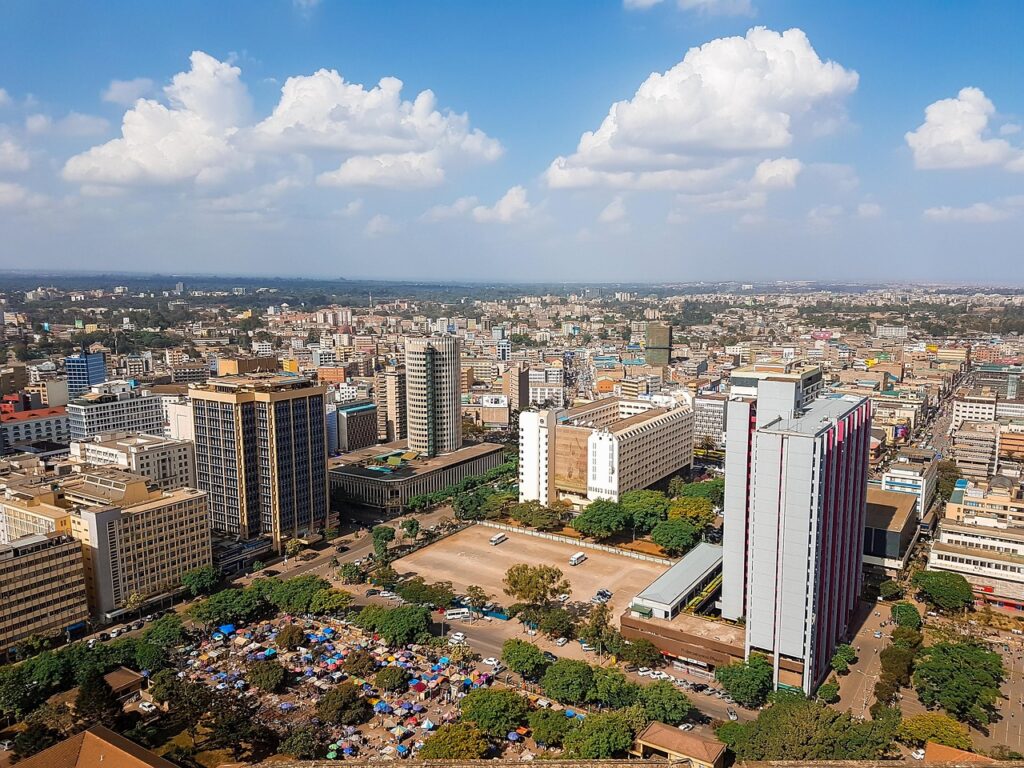
Here are 15 key facts about Nairobi that capture the essence of East Africa’s most dynamic city.
1. Its Name Means “Cool Water”
Nairobi derives its name from the Maasai phrase Enkare Nyrobi, which translates to “cool water.” This refers to the cold waters of the Nairobi River that flows through the area, which was once a vast, uninhabited grazing land and swamp before the city’s establishment.
2. It Was Born from a Railway Camp
Similar to Johannesburg’s rapid, resource-driven rise, Nairobi was founded quickly—but not for gold. It was established in 1899 as a simple, rustic supply depot and shunting yard for the Uganda Railway being built by the British colonial authorities.
3. It Replaced Mombasa as the Capital
Before Nairobi’s meteoric rise, the coastal city of Mombasa was the capital of the British East Africa Protectorate. By 1907, Nairobi had grown so significantly that the capital was relocated there, cementing its status long before Kenya gained independence in 1963.
4. It Is the “Green City in the Sun”
Despite its rapid urbanization and towering skyline, Nairobi is famous for its lush foliage, tree-lined streets, and abundant parklands. This commitment to blending urban life with nature earned it the enduring nickname, “The Green City in the Sun.”
5. It Is the Only City with a National Park on Its Doorstep
Nairobi holds the unique global distinction of having a national wildlife park within its borders. Nairobi National Park is just a short drive from the central business district, where you can photograph lions, rhinos, and giraffes with towering city skyscrapers as the backdrop.
6. It Is the “Silicon Savannah” of Africa
Nairobi is a massive technology and innovation hub. Its booming tech ecosystem, which pioneered world-leading mobile money systems like M-Pesa, has earned the city global recognition and the modern moniker “Silicon Savannah.”
7. It Hosts Major United Nations Headquarters
Nairobi is one of only four cities in the world (alongside New York, Geneva, and Vienna) to host a major United Nations headquarters. The United Nations Office at Nairobi (UNON) is the UN’s headquarters in Africa and serves as the global home for the UN Environment Programme (UNEP) and UN-Habitat.
8. It Has a Surprising High-Altitude Climate
Despite being located just a few degrees south of the equator, Nairobi does not have a sweltering tropical climate. Sitting at an altitude of approximately 1,795 meters (5,889 feet) above sea level, it enjoys a mild, temperate, and comfortable climate year-round.
9. Matatus Are a Moving Art Gallery
The city’s primary mode of public transportation, the matatu (minibus), is a cultural phenomenon. These vehicles are heavily customized with elaborate graffiti, neon lights, flat-screen TVs, and loud music, acting as a vibrant canvas for local artists and a reflection of urban pop culture.
10. It Is the Birthplace of “Sheng”
The linguistic diversity of Nairobi’s youth gave rise to Sheng, a dynamic urban slang that blends Swahili, English, and various indigenous Kenyan languages. What started in the city’s eastern neighborhoods has now become a mainstream cultural identifier across the country.
11. It Is a Sanctuary for Orphaned Elephants
Nairobi is home to the world-renowned David Sheldrick Wildlife Trust. This pioneering orphanage rescues, treats, and rehabilitates orphaned baby elephants and rhinos from all over Kenya, with the ultimate goal of successfully reintegrating them back into the wild.
12. It Houses One of Africa’s Largest Slums
Highlighting the city’s stark socioeconomic contrasts, Nairobi is home to Kibera, considered one of the largest urban slums in Africa. Despite the intense challenges, it is a bustling, highly resilient community full of micro-entrepreneurs, artists, and grassroots organizations.
13. You Can Hand-Feed a Giraffe Here
In the leafy, affluent suburb of Karen, you will find the Giraffe Centre, an important conservation sanctuary for the endangered Rothschild’s giraffe. Visitors can interact with and hand-feed these towering creatures from an elevated wooden platform.
14. It Has Strong Global Literary Ties
The suburb of Karen is named after Karen Blixen, the Danish author of the famous memoir Out of Africa. Her former farmhouse at the foot of the Ngong Hills has been beautifully preserved and now serves as a popular public museum.
15. It Is the Safari Capital of the World
Nairobi serves as the undisputed jumping-off point for East African wildlife tourism. Almost every major safari to legendary destinations like the Maasai Mara, Amboseli, or Tsavo begins or ends at Nairobi’s Jomo Kenyatta International Airport.
Nairobi is often linked with Johannesburg, so read these Johannesburg facts here.